
Tennessee Execution of Christa Pike Falters in Nashville After Two Lethal Injections Fail to End Her Life, Forcing Officials to Halt the Procedure and Send Her to Hospital
NASHVILLE, TN — Christa Pike’s execution in Tennessee went wrong Wednesday night when two doses of the state’s lethal injection drug failed to kill her, leaving the condemned inmate breathing, moving and apparently conscious long after the procedure should have been over.
Pike, 50, had been sentenced to die for the 1995 torture and killing of 19-year-old Colleen Slemmer. She told witnesses before the drugs were administered that she was at peace, said she was leaving the world with love and added, “I’m ready to be free.”
Instead, she left the prison in an ambulance after prison officials stopped the execution and she was taken to a hospital. The Tennessee Department of Correction said she was transported to an off-site medical facility. Her lawyers said Thursday afternoon that she was in critical condition receiving medical care.
Witnesses saw Pike awake and talking as the first dose took effect
The Associated Press was among the witnesses in the execution chamber as officials brought Pike into the room at 7:27 p.m. and raised the curtain. She was strapped to a gurney with an IV in place, and her spiritual adviser stood near her head, speaking with her and singing a song in which the words “I love you” could be heard repeatedly.
As minutes passed, Pike raised her head, looked around and smiled. She also said her arm hurt and asked a prison official whether it was supposed to feel that way. At 7:37 p.m., she sighed while the IV line delivered pentobarbital from a control room next to the death chamber.
Officials placed a small object on the ledge near the chamber at 7:41 p.m., a move that appeared to line up with protocol language calling for a countdown before the curtain is closed. By 7:46 p.m., the curtain came down and witnesses lost sight of the chamber.
Second injection did not stop the breathing and snoring sounds
The curtain reopened three minutes later, and the protocol called for a second round of pentobarbital if the inmate was still alive. Pike’s spiritual adviser returned to the room and remained beside her with his hands folded.
Officials and witnesses said she appeared to lose consciousness at some point, then started making a sound like snoring that continued for more than an hour. Her head lifted slightly and turned to the side around 7:56 p.m., and she was still breathing. The curtain closed again at 8:06 p.m.
For the next 40 minutes, sounds from behind the curtain suggested she was still alive. The regular breathing pattern continued to sound like snoring, reinforcing what witnesses saw earlier in the chamber.
Defense lawyer sought help as officials moved toward an ambulance
Inside the prison, Pike’s attorney, Randy Spivey, later said he asked around 8:22 p.m. for access to a telephone so he could reach other lawyers on the defense team. He said he demanded that the execution be stopped and that Pike receive life-saving medical care.
Spivey said he was told at about 8:50 p.m. that an ambulance was on the way. At 8:53 p.m., prison officials told witnesses, “Will witnesses please exit the area.” The media was escorted out, and a prison spokesperson said she had no information to share about what had happened.
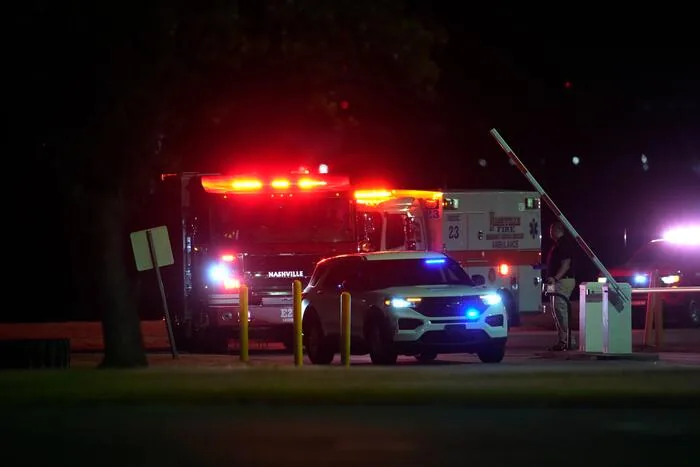
Fire trucks and ambulances arrived outside the prison around 9:14 p.m. Pike’s attorneys later said she had been taken to a hospital. By Thursday afternoon, they said she was in critical condition and receiving treatment.
State officials say protocol was followed but have not explained the failure
The Tennessee Department of Correction said in a statement that the execution team followed protocol. The agency said the lethal injection drug in the state’s procedure has “consistently been effective” and that the protocol does not permit extra steps beyond what was done that night.
Officials have not said why the execution failed. It was the second time this year Tennessee has been unable to complete an execution, though the earlier case ended before drugs were administered because officials could not find a suitable vein for an IV line.
The state’s account left open the central question of what happened to Pike after the two injections. The department confirmed only that she had been moved to an off-site medical facility.
Governor pauses another execution and orders a review of what happened
Gov. Bill Lee ordered a review of the failed execution and postponed another execution scheduled for later this year. He called what happened in the death chamber “deeply disturbing.”
The decision made Pike’s case part of a broader problem for Tennessee officials, who are now facing scrutiny over how the state carries out capital punishment. The failed execution also means the state must explain whether the breakdown came from the drug protocol, the IV process or another issue it has not yet identified.
For Slemmer’s mother, May Martinez, the night ended in disappointment. She had traveled to Nashville to see the sentence carried out. She said she did not get justice for her daughter and described Pike as awake, moving and trying to sit up as the procedure unfolded.
Family of Colleen Slemmer says the outcome denied closure
Martinez told the AP by telephone that she watched the entire process and saw Pike move her head and feet. She said the first injection did not work and neither did the second, adding that Pike was alive and in the hospital.
“This isn’t justice for Colleen,” Martinez said. Her comments underscored the emotional weight of an execution that was meant to bring finality to a decades-old murder case but instead ended with an inmate surviving the procedure.
Pike had been just 18 when she committed the killing that led to her death sentence. She would have been the first woman executed in Tennessee in more than 200 years, but the night’s events turned that milestone into a failed attempt that now faces official review.
