
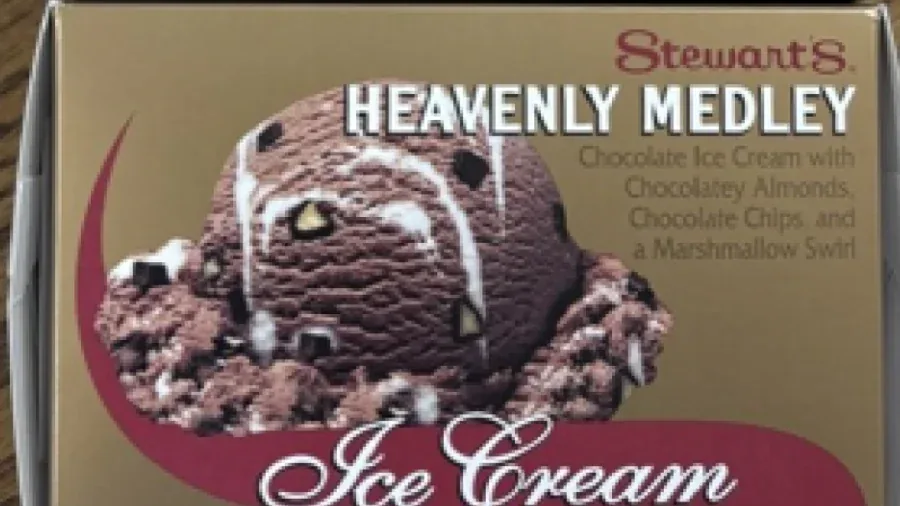
FDA Recalls Stewart’s Shops Ice Cream Sold in New York, Vermont and New Hampshire After a Shopper Found a Metal Object in a Half-Gallon Carton
ALBANY, NY — The U.S. Food and Drug Administration announced a recall this week for Stewart’s Shops ice cream sold in New York, Vermont and New Hampshire after a consumer found a metal object in a half-gallon carton.
Stewart’s Shops management said the recall was started after the object was discovered in one carton. The company said the affected product was sold in half-gallon paperboard cartons at all Stewart’s Shops locations in the three states between July 17 and Oct. 2.
No injuries or illnesses have been reported in connection with the recall.
Where the recalled ice cream was sold
The recall covers frozen ice cream sold through Stewart’s Shops locations across New York, Vermont and New Hampshire. The FDA said the product was distributed in those states over a period of more than two months, ending Oct. 2.
That means customers who bought the half-gallon cartons during that window may want to check what they still have at home. Stewart’s Shops and the FDA did not say how many cartons were affected or identify specific flavors in the notice provided.
The recall applies only to the half-gallon paperboard cartons named in the notice. The company said the problem was discovered by a consumer, which triggered the action.
Why metal objects in food are taken seriously
Foreign objects are materials that are not normally part of food and can create a risk of injury or illness. The FDA included metal fragments in that category because they can cause harm if swallowed.
When metal is ingested, it can lead to internal cuts, infection or surgery to remove the fragment. The notice also points out that food manufacturing equipment is often made of metal, which is one reason contamination can happen during processing.
Researchers cited by the FDA said metal pieces can reach food through employee handling practices, such as failing to wear protective clothing, wearing jewelry or carelessly handling metallic items.
How foreign objects can end up in packaged foods
The FDA said foreign objects can enter a food plant as part of raw materials, including fruit pits, bones, stones, insects, soil, grit or pieces of harvesting equipment. Once inside a processing environment, those materials can end up in packaged food if they are not removed.
In this case, Stewart’s Shops said a metal object was found by a customer in a carton of ice cream. The company did not say how the object got there, but the recall was issued after the discovery.
Food safety alerts involving hard foreign objects are often handled quickly because they can pose a choking or injury risk even when no one has yet been hurt.
Recent frozen dessert recall at Danone USA
The Stewart’s Shops action comes after a separate recall last month involving Danone USA’s So Delicious Dairy Free Salted Caramel Cluster Non-Dairy Frozen Dessert pints. The FDA said those containers could contain small stones or other hard foreign objects.
That recall applied to products with SKU 136603, UPC 744473476138 and best-by dates on or before April 3, 2028. The FDA said WhiteWave, a Danone company based in Louisville, Colorado, first recalled the So Delicious Dairy Free Salted Caramel Cluster Cashewmilk Non-Dairy Frozen Dessert after similar concerns.
In that case, the company said it was working with retail partners to remove the product from shelves and had already identified and corrected the issue.
What consumers should know now
For consumers, the most important step is to check whether any Stewart’s Shops half-gallon ice cream cartons bought in New York, Vermont or New Hampshire during the recall period are still in the freezer.
The FDA notice did not report injuries or illnesses, but it did make clear that the problem involved a metal foreign object found by a shopper. Products connected to such recalls should not be eaten.
Stewart’s Shops and the FDA have not said whether the recall is limited to a single flavor or whether additional products could be involved. Customers with concerns can look for official recall details from the company and the FDA.
