
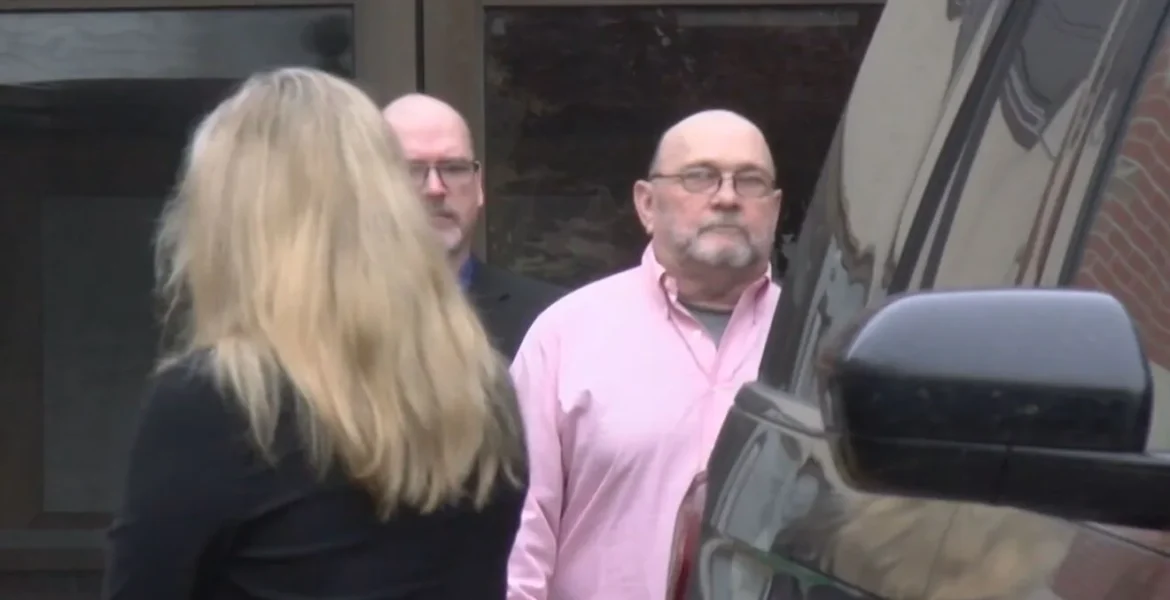
Man Convicted in 1984 Murder of Maine Teen Linda Maxwell After Machias Jury Finds Raymond Brown Guilty More Than 40 Years Later
MACHIAS, ME — Family members of a Calais teenager say they now have closure more than four decades after her death, following a guilty verdict in a Machias courtroom. Raymond Brown, 65, was found guilty Thursday of murder in the killing of 18-year-old Linda Maxwell.
Police said Maxwell was last seen in the Calais area on Aug. 23, 1984 after spending the evening with friends. Two days later, her body was found on the shore of the St. Croix River in Robbinston.
The case had remained under investigation for years before Brown’s arrest in 2025.
Linda Maxwell was last seen in Calais before her body was found in Robbinston
According to police, Maxwell disappeared after a night out with friends in the Calais area on Aug. 23, 1984. She was 18 years old at the time.
Her body was discovered two days later on the shore of the St. Croix River in Robbinston, ending the immediate search but not the unanswered questions surrounding her death.
The long delay between the killing and the verdict underscores how cold-case investigations can stretch across decades. In this case, the criminal case remained active enough for investigators to continue working it for years.
Brown was arrested during a traffic stop in May 2025
Police arrested Brown in May 2025 during a traffic stop and later charged him with murder in connection with Maxwell’s death. The arrest came after years of investigation into the 1984 case.
Brown pleaded not guilty. The verdict in Machias means a jury rejected that plea and concluded prosecutors proved their case beyond a reasonable doubt.
His age, 65, and the length of time since the crime made the prosecution a notable cold-case milestone in Washington County.
A Machias courtroom delivered a verdict more than 40 years after the killing
The murder trial ended Thursday in Machias, where the jury found Brown guilty. The town serves as the county seat for Washington County and was the setting for a case that has followed Maxwell’s family for generations.
For relatives, the decision marked a long-awaited turning point after more than 40 years of uncertainty. The verdict did not erase the loss, but it did bring an official legal conclusion to the case.
That kind of resolution is especially significant in older homicide investigations, where evidence, witnesses, and memories can fade over time.
Family members say the verdict brings closure after decades of waiting
WGME and WVII reported that Maxwell’s family viewed the verdict as closure. After years without a resolution, the guilty finding answered at least one of the central questions that had remained open since 1984.
The case had stood out not only because of the time that passed, but also because investigators were still able to make an arrest so many years later. Brown’s 2025 traffic stop eventually led to murder charges and, ultimately, the trial in Machias.
No sentencing date has been set yet, so the case is not fully complete in the courts.
No sentencing date has been announced after the murder conviction
Although Brown was found guilty, the court has not yet scheduled sentencing. That means the punishment phase of the case still remains ahead.
For now, the verdict stands as the central development in a homicide investigation that began in 1984, was revived by an arrest in 2025, and ended this week with a conviction in Machias.
The facts of the case, as presented in court and by police, trace a long path from Maxwell’s disappearance in Calais to the discovery of her body in Robbinston and Brown’s eventual conviction more than 40 years later.
