
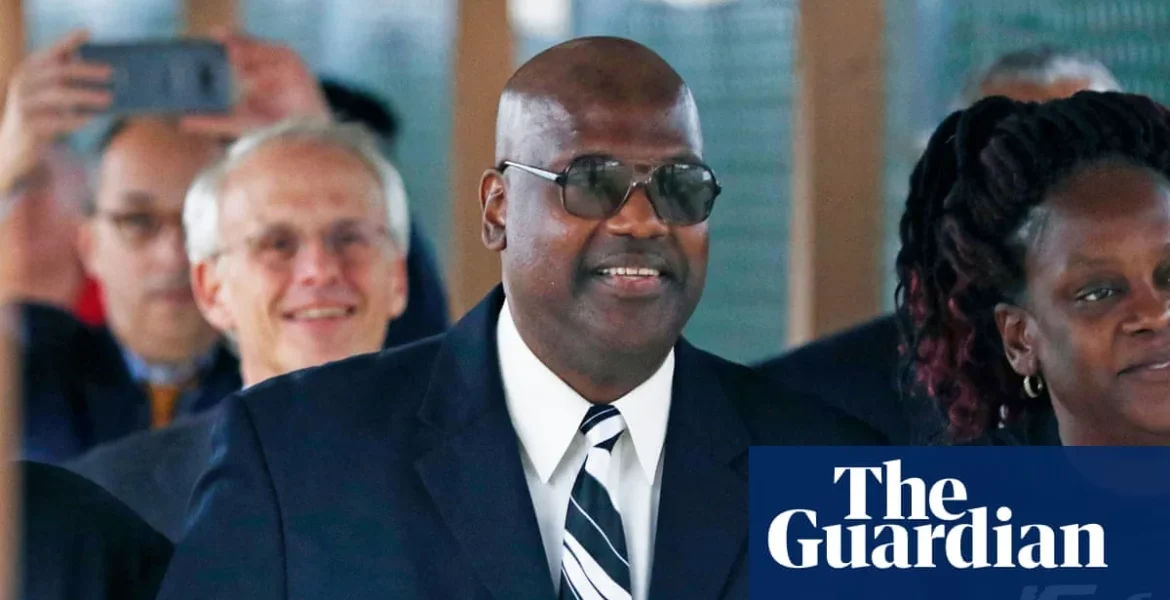
Curtis Flowers, Mississippi Man Wrongfully Imprisoned for 22 Years After Six Murder Trials, Dies at 56 Following Supreme Court Ruling That Overturned His Conviction
JACKSON, MS — Curtis Flowers, the Mississippi man who spent more than 22 years behind bars and was sentenced to death after multiple trials in one of the state’s most closely watched murder cases, has died at 56.
Flowers’ family said he died Wednesday at his home in Mississippi, according to attorney Rob McDuff, who represented him and confirmed the death to the Associated Press on Thursday. No cause of death was released.
Flowers’ case drew national attention for years because of repeated trials, allegations of racial bias in jury selection and the long delay between the Supreme Court’s ruling and his eventual release.
A 1996 furniture-store shooting led to years of prosecutions
Flowers was 26 when he was arrested months after the July 1996 shooting deaths of four people inside a furniture store in Winona, Mississippi. Prosecutors said at the time that he was a disgruntled former employee who wanted revenge against the store owner after she fired him.
They also said she had withheld most of his pay to cover the cost of merchandise he damaged, and nearly $300 was reported missing after the killings. Those accusations became the basis for a case that prosecutors kept pursuing for more than a decade.
Flowers was tried six times in connection with the killings, an unusually long series of prosecutions that made his case a symbol of how a capital case can remain alive for years even after repeated reversals.
Supreme Court found juror discrimination in the death-penalty case
The US Supreme Court threw out Flowers’ conviction and death sentence in 2019. Justice Brett Kavanaugh wrote in the court’s 7-2 decision that the removal of Black prospective jurors denied Flowers a fair trial.
The ruling focused on actions by district attorney Doug Evans, who struck five Black prospective jurors during Flowers’ sixth trial in 2010. That jury ended up with 11 white jurors and one Black juror.
The court’s decision was a major rebuke of the prosecution’s handling of the case and renewed scrutiny of racial discrimination in jury selection, especially in death-penalty cases.
Flowers stayed in prison for months after the ruling
Even after the Supreme Court’s decision, Flowers did not walk free right away. He remained incarcerated for another six months because he was still under indictment in the case.
He was finally released in December 2019 after a judge set bond. That delay underscored how a Supreme Court ruling did not immediately end the legal process in his case.
Mississippi later dropped the charges against Flowers in September 2020, closing the criminal case that had shadowed much of his adult life.
Flowers said freedom came after nearly 23 years of injustice
When the charges were dropped, Flowers said in a statement that he was “finally free from the injustice” that had kept him “locked in a box for nearly 23 years.”
He said people asked whether he ever believed that day would come, and he answered that he had been blessed by family members who never gave up on him. He said their support convinced him the day would arrive.
Those comments reflected the toll the case took on him and the role his family played through years of appeals, hearings and uncertainty.
A case that became a lasting example of wrongful imprisonment
Flowers’ death closes the life of a man whose name became tied to one of Mississippi’s most prominent wrongful-conviction cases. His story involved a death sentence, a Supreme Court reversal and a long fight to clear the path to freedom.
It also left behind a record of how jury selection and prosecutorial decisions can shape the outcome of a capital case. The high court’s ruling and the later dismissal of charges are likely to keep his case in discussions about fairness in the criminal justice system.
For Flowers, the legal victory came only after decades lost to prison. By the time Mississippi ended the case, he had already spent most of his adult life fighting to be heard.
